Some openings ask the audience to settle in. Circle of Life asks the audience to look up, widen their eyes, and remember that theater can still surprise them. The Lion King begins with a rare kind of confidence: it does not explain the magic before delivering it. It simply lets the world arrive.
That arrival is why the number remains one of Broadway’s most beloved first impressions. The story may be familiar from the film, but the stage version makes a crucial decision. It does not try to hide the theatrical machinery. It celebrates it. We see performers, puppets, masks, fabric, bodies, rhythm, and design working together, and somehow the result feels more alive because we can see the hands making it happen.
Watch the Clip
Why It Works
Circle of Life works because it transforms recognition into wonder. Many viewers know the song before they enter the theater. They may think they know what is coming. Then the stage picture begins to unfold, and familiarity becomes astonishment.
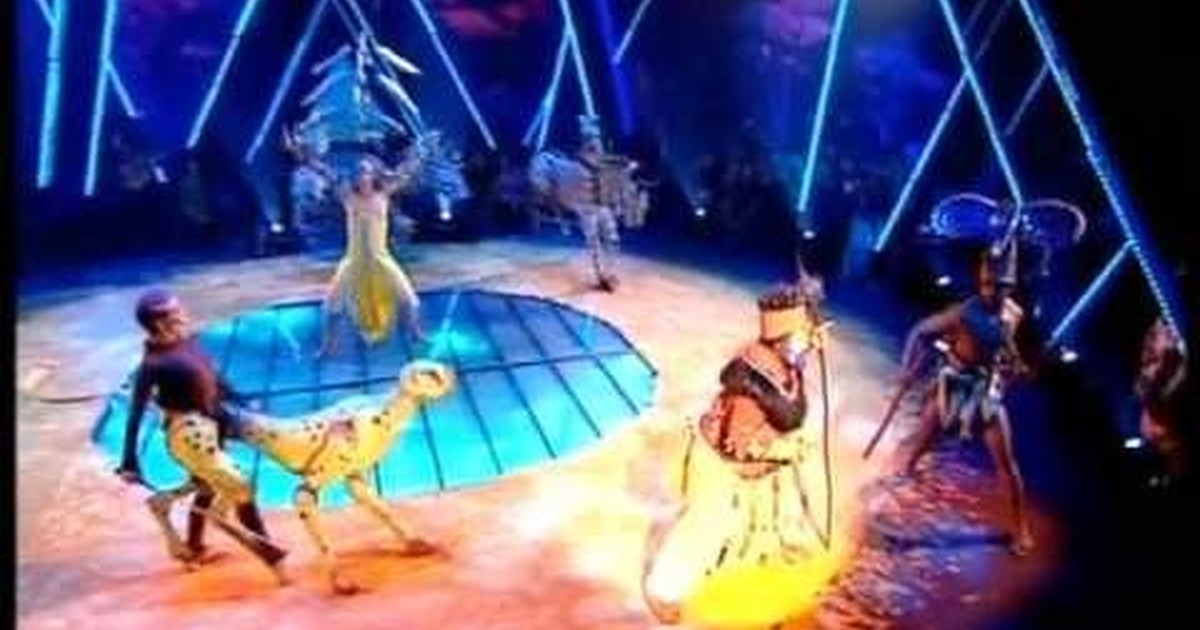
The production’s design language is essential. Animals are not recreated as literal illusions. They are suggested through craft: a turn of the head, a lifted shape, a procession, a silhouette. The audience is invited to participate imaginatively. That invitation is powerful. Instead of being tricked, we are trusted.
This is one of Julie Taymor’s great theatrical insights in the show: visible artifice can be more magical than hidden machinery. When we see a performer and a puppet at the same time, our minds do not reject the illusion. They complete it.
What to Watch For
Watch how the number fills space. It does not feel like scenery being placed on a stage. It feels like a world waking up from multiple directions. The procession gives the audience time to register each image while still building toward a larger ceremony.
Also notice how the music and visuals support each other. The song carries grandeur, but the staging gives that grandeur texture. A single puppet can feel intimate; a full stage picture can feel overwhelming. The number moves between those scales beautifully.
The opening also sets the rules for the whole show. It tells the audience: this will not be realism, and it will not be cartoon imitation. It will be theatrical imagination in full view.
Why People Share It
People share Circle of Life because it is an easy reminder of what live theater can do that video alone cannot fully capture. Even through a clip, you can sense the audience reaction waiting beneath the image. You can imagine the gasp.
It is also a perfect gateway for people who think Broadway is only about songs and dialogue. This number is visual storytelling. It uses movement, scale, craft, and ritual to communicate before the plot even begins.
That makes it especially valuable for Big City Broadway. It is a clip that can reach theater fans, families, designers, dancers, musicians, and anyone who loves seeing imagination made physical.
Why the Stage Version Matters
The stage version of The Lion King could have tried to compete with animation on animation’s terms. Instead, it chose a smarter path. It made the live body central. The audience sees people creating animals, landscapes, and ritual in front of them, and that visibility becomes the point.
That choice gives the opening a special emotional texture. We are impressed by the image, but we are also moved by the human effort behind it. The miracle is not that the theater hides people. The miracle is that people, seen clearly, can make us believe in an entire kingdom.
The Big City Broadway Takeaway
Circle of Life remains magical because it begins with generosity. It gives the audience beauty immediately. It does not make viewers wait to understand why they are there.
In a world full of screens, The Lion King still makes a stage feel like a place of discovery. The opening number reminds us that theater’s oldest trick is still its best one: a group of people gathers in a room, agrees to imagine together, and suddenly something impossible walks into view.