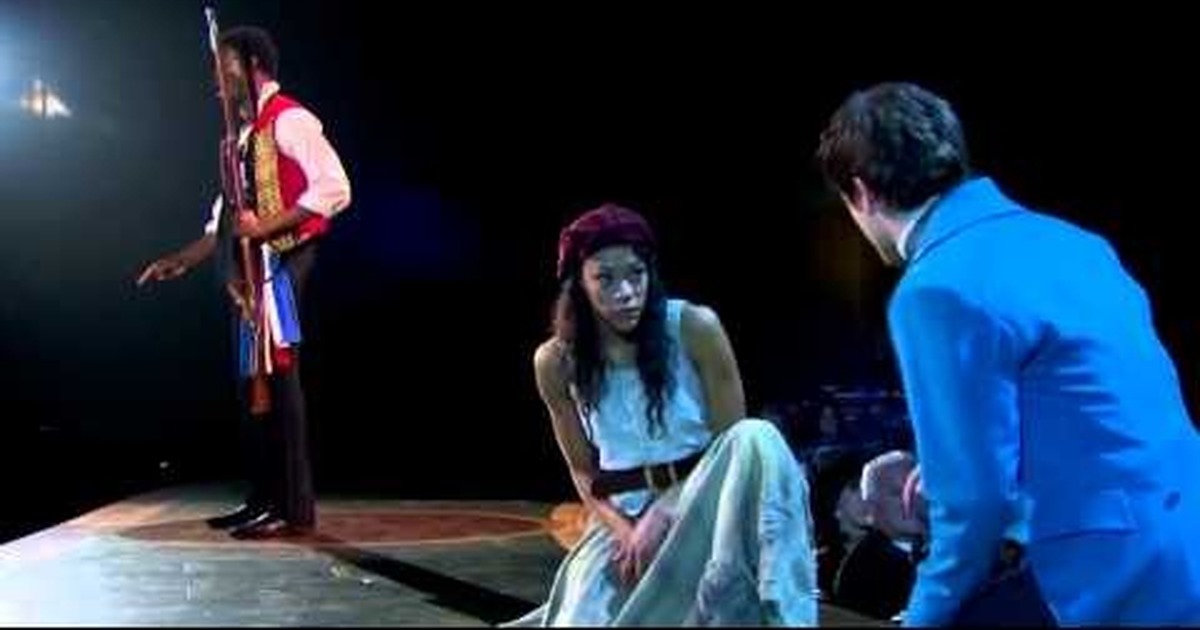
One Day More is one of the great examples of musical theater doing what only musical theater can do. It takes a crowd of separate people, each with a private fear or hope, and lets them sing toward the same tomorrow. By the end, the number feels less like a song than a weather system.
Les Miserables is full of enormous emotion, but One Day More is special because it gathers so many strands at once. Love, revolution, jealousy, duty, disguise, faith, fear: they all start moving together. The audience can feel the story tightening. Everyone is headed somewhere, and no one can stop the morning from arriving.
Watch the Clip
Why It Works
The genius of the number is accumulation. It does not rely on one character’s revelation. It layers revelations until the stage feels crowded with destiny. A melody returns. Another voice enters. A new motive cuts across the old one. Suddenly we are hearing the whole dramatic machine at once.
That is why the song remains so satisfying in concert clips and staged performances alike. Even when you are not watching the full production, the structure tells you what you need to know. These people are not simply singing together. They are moving toward conflict from different emotional directions.
The title itself has a built-in theatrical charge. One day more. It is a promise, a threat, a prayer, and a countdown. Every character hears it differently. That shared phrase becomes a container for all their separate anxieties.
What to Watch For
Watch how the performers manage focus. Ensemble numbers can become mush if everyone seems to be expressing the same feeling. One Day More works because the feelings remain distinct. The revolutionaries are not in the same emotional place as the lovers. The pursuer is not in the same world as the pursued. Yet the music forces them into relationship.
Also listen to the counterpoint. Musical lines overlap in a way that feels almost cinematic, but the effect is deeply theatrical. The audience hears the split screen. We understand that different rooms, streets, and hearts are all moving at once.
That sense of simultaneity is one of the reasons the number has become a favorite beyond the show itself. It captures the feeling of standing at the edge of a major change, when everything has been set in motion but nothing has landed yet.
Why People Share It
One Day More is shareable because it delivers scale. Even people who do not know the whole plot can feel that the stakes are huge. The music tells them. The formation of the ensemble tells them. The mounting intensity tells them.
For theater fans, it is also comfort food of the highest order. Not because it is soft or easy, but because it represents a classic kind of Broadway satisfaction: characters stepping forward, themes converging, voices stacking until the stage feels almost too full to contain the story.
It is the kind of number that makes people remember why cast albums became treasured objects. You can listen at home and still feel the barricade forming in your imagination.
The Pleasure of Everyone at Once
There is a particular thrill in hearing a musical trust the audience with many emotions at the same time. One Day More does not simplify the story into one mood. It lets fear, romance, vengeance, duty, and hope all coexist. That complexity is the pleasure.
The number also rewards repeat watching. The first time through, the sweep may be enough. On another pass, individual threads become clearer: who is moving toward love, who is moving toward violence, who is clinging to order, and who is already imagining a different world. The song gets bigger the more you can hear inside it.
The Big City Broadway Takeaway
One Day More endures because it understands anticipation. It does not show us the explosion. It shows us the breath before it. That breath is enormous.
Musical theater is uniquely good at making inner life public. In One Day More, everyone’s inner life becomes public at once. The result is a thrilling reminder that the best ensemble numbers are not just big. They are organized emotion, built voice by voice until tomorrow feels unavoidable.