
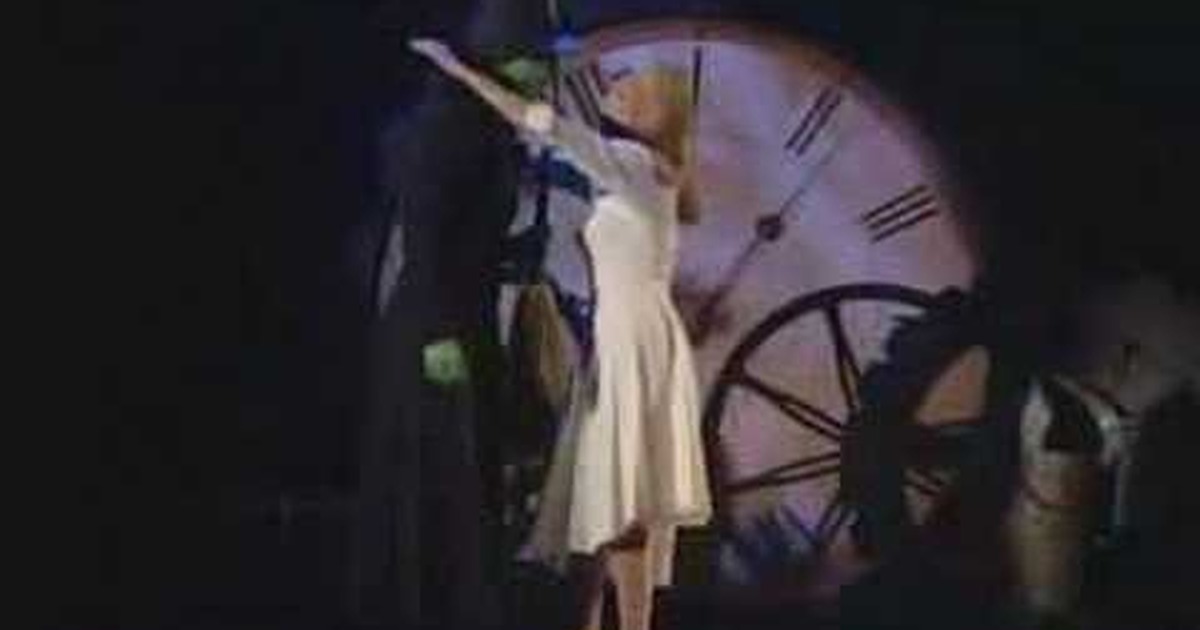
Defying Gravity has become so famous that it is easy to forget how well it works as drama. Yes, it has the big vocal release. Yes, it has the visual lift. Yes, it has become an anthem far beyond the theater. But the reason the moment still lands is that it is not simply about flying. It is about choosing.
In Wicked, Elphaba reaches a point where compromise is no longer possible. The world has named her incorrectly, feared her too easily, and asked her to shrink herself into acceptability. Defying Gravity is the moment she stops asking permission to be understood.
Watch the Clip
Why It Works
The number is built around escalation, but the escalation is emotional before it is musical. Elphaba does not begin as an icon. She begins as someone hurt, cornered, and clarifying herself in real time. That makes the final lift feel like a consequence, not a stunt.
The song’s power comes from the way it turns isolation into force. Elphaba is alone in one sense, but the music makes that aloneness enormous. The stage picture says what the character cannot fully explain: if the world will not make room, she will take the sky.
That is why audiences respond so strongly. The specifics are fantastical, but the feeling is not. Many people know what it is like to be misread, underestimated, or pressured to become smaller. Defying Gravity gives that feeling a theatrical release valve.
What to Watch For
Watch the decision happen. The most important part of the number is not only the climactic image. It is the chain of choices that leads there. Elphaba weighs loyalty, fear, anger, and freedom. The song becomes compelling because we can see her crossing a point of no return.
Also notice how the staging understands verticality. The lift is memorable because the whole number has been pushing toward it. The music rises, the stakes rise, the character’s self-knowledge rises. By the time the stage picture follows, the audience is ready.
A weaker version of the moment would treat the effect as the point. Wicked understands that the effect is the punctuation mark.
Why People Share It
Defying Gravity is endlessly shareable because it gives viewers a complete emotional arc in one clip. You do not need to know every plot detail to understand that someone has decided she will no longer be controlled.
For theater fans, it is also a joy because it does what act-one finales are supposed to do. It leaves the audience charged, unsettled, and desperate to know what happens next. The curtain does not simply fall. It lands after a transformation.
The number’s afterlife as an anthem makes sense. People return to it when they need courage, release, or the fantasy of rising above a room that has judged them too quickly.
Why the Moment Belongs to the Audience Too
One reason Defying Gravity has traveled so far beyond Wicked is that audiences bring their own lives to it. Elphaba’s situation is specific, but the emotional pattern is widely recognizable: being misunderstood, being pressured to conform, and finally deciding that approval is too expensive.
That is why the number can feel personal even in a huge theater. The bigger the music gets, the more private the response can become. Viewers are not only watching Elphaba rise. They are imagining what it would feel like to stop apologizing for their own shape.
The Power of an Act-One Ending
As an act-one finale, the song does exactly what it should. It does not resolve the story. It transforms it. The audience goes to intermission with a new understanding of who Elphaba is and what kind of musical they are watching.
That is a difficult trick: closure and cliffhanger at the same time. Defying Gravity gives us the satisfaction of a decision while making the consequences feel enormous.
The Big City Broadway Takeaway
Defying Gravity remains magical because it fuses spectacle with self-definition. The visual is unforgettable, but the emotional engine is the real reason people keep coming back.
It is Broadway at its most cathartic: a character steps into her power, the orchestra opens up, the stage image explodes, and everyone watching gets to borrow a little of that courage.