
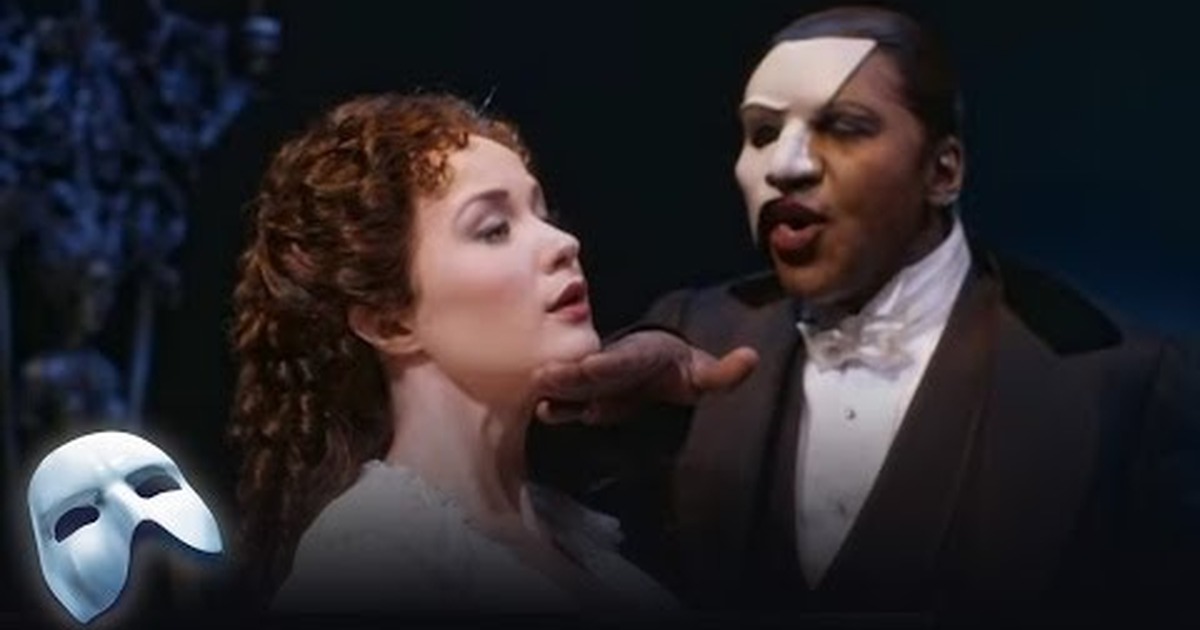
The Music of the Night is not a chase, a battle, or a dance explosion. Its power is quieter and stranger. It draws the audience into a world of candlelight, shadow, control, and seduction, then asks everyone to sit inside the spell.
The Phantom of the Opera has plenty of grand theatrical images, but this number endures because it understands atmosphere. It is not only about what is being sung. It is about the temperature of the room, the patience of the melody, and the sense that the stage has become a hidden chamber.
Watch the Clip
Why It Works
The song gives the Phantom one of musical theater’s great invitations. He is not simply declaring love or villainy. He is trying to create a world where his rules make sense. That makes the number fascinating because it is beautiful and unsettling at the same time.
A great performance has to hold both truths. If the number is only romantic, it loses its danger. If it is only sinister, it loses its pull. The magic lives in the tension between them.
The music helps by moving with unusual patience. It does not rush to its emotional peaks. It coils, opens, retreats, and returns. That pacing gives the performer room to shape the character’s mystery rather than simply sing through it.
What to Watch For
Watch the stillness. In musical theater, stillness can be risky because it exposes everything. There is no ensemble to hide behind, no choreography to distract from weak choices. The performer has to command attention through presence.
Also watch the relationship between the Phantom and the space around him. The lair is not just a location. It is an extension of his mind: theatrical, lonely, controlled, and extravagant. The number works when the audience feels that Christine is entering not only a room but a psychological landscape.
That is why lighting and design matter so much here. The candles, darkness, and shadows are not decoration. They make the song’s emotional logic visible.
Why People Share It
People share The Music of the Night because it represents a classic kind of Broadway grandeur: lush, mysterious, and unapologetically theatrical. It is the opposite of casual. It wants to transport you.
For Phantom fans, the number is also a test of interpretation. Different performers bring different shades to the role: tenderness, menace, elegance, desperation, control. The song can absorb those choices because it is built around ambiguity.
That ambiguity keeps it interesting. The audience may be swept away by the beauty of the music while still sensing the danger beneath it. Few musical theater moments hold that contradiction so elegantly.
The Pull of Ambiguity
One reason the number keeps fascinating audiences is that it refuses to settle into a single emotional category. It can sound romantic, but the situation is uneasy. It can feel frightening, but the music is undeniably beautiful. The audience is caught between attraction and alarm.
That ambiguity gives the performer a rich field to play. A small change in tone can make the Phantom seem wounded, commanding, seductive, lonely, or dangerous. The best versions do not choose only one. They let all of those possibilities flicker in the candlelight.
A Showcase for Control
The song also rewards vocal and dramatic control. It is not a number that benefits from rushing. The performer has to trust the slow burn. Each phrase needs space, and each pause needs intention.
That patience is part of the magic. The audience is not pushed into the moment. It is drawn in, almost against its better judgment, until the atmosphere feels complete.
The Big City Broadway Takeaway
The Music of the Night proves that Broadway magic does not always arrive with speed. Sometimes it arrives slowly, one phrase at a time, until the audience realizes it has been pulled somewhere else.
It is a reminder that atmosphere is an art. The right song, the right lighting, the right performer, and the right silence can make a stage feel infinite.