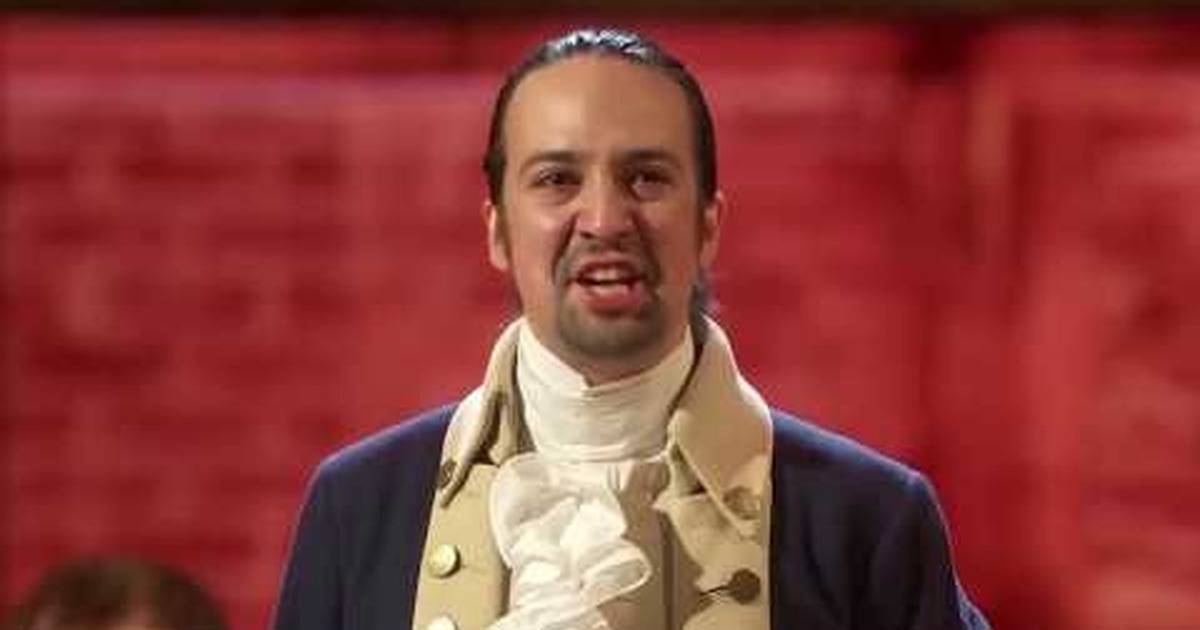
Hamilton’s Yorktown performance is the kind of Broadway clip that still feels charged even after the cultural explosion around the show has been discussed from every possible angle. Part of that is craft. Part of it is timing. And part of it is the rare thrill of watching a musical make history feel like it is happening right now.
By the time Hamilton reached the Tony Awards stage, the show was already more than a hit. It had become a conversation: about casting, form, American mythmaking, hip-hop, biography, immigration, ambition, and who gets to stand at the center of the national story. Yorktown brings many of those ideas into one focused burst.
Watch the Clip
Why It Works
The number has momentum baked into it. It is about a battle, yes, but onstage it plays like a collision of strategy, rhythm, friendship, danger, and release. The ensemble drives the action with the kind of precision that makes the stage feel larger than it is. Every body seems to know exactly where the beat lives.
What makes the performance special is that it does not ask the audience to choose between history and feeling. It gives us both. The details may come from a Revolutionary War moment, but the emotional engine is contemporary: young people risking everything because they believe the future might actually be movable.
That feeling is why Hamilton connected so broadly. The show takes figures who can feel frozen on monuments and returns nervous systems to them. They want things. They brag. They panic. They joke. They fight. Yorktown captures the rush of those wants becoming collective action.
What to Watch For
Watch how quickly the performance establishes stakes. The choreography does not merely decorate the music. It organizes the story. Groups form and break apart. Lines become military, then social, then rhythmic. The audience is always being shown where energy is moving.
Also notice the balance between swagger and danger. Hamilton has plenty of confidence, but Yorktown would not work if it were only triumphant. The number has to carry the knowledge that revolutions are not clean. The excitement comes with risk. The victory has a cost.
The Tony Awards setting adds another layer. This was not just a scene inside a musical. It was a musical presenting itself to a national audience at the height of its impact. The performance had to communicate the show’s identity in a few minutes, and it did: language, movement, history, urgency.
Why People Share It
People share this clip because it has instant velocity. You do not need a long introduction. The rhythm grabs you, the staging clarifies the conflict, and the ensemble makes the stakes feel communal.
For longtime theater fans, it is also a reminder of how thrilling awards-show performances can be when they are more than advertisements. The best Tony numbers give viewers a concentrated dose of the show’s heartbeat. Yorktown does exactly that. It says: this is our sound, this is our movement, this is the scale of our ambition.
It also helps that Hamilton made musical theater feel newly discussable for people who did not think of themselves as Broadway people. Clips like this became entry points. Someone clicked for the hype, stayed for the performance, and suddenly understood why everyone was talking.
More Than a Showcase
The reason Yorktown still reads as more than a strong awards-show excerpt is that it contains the show’s whole argument in miniature. Hamilton is interested in who gets remembered, who gets erased, and how stories become national memory. In this number, those questions are not delivered as a lecture. They arrive through rhythm and movement.
That is the cleverness of the performance. It lets entertainment carry the ideas. Viewers can enjoy the speed, humor, and choreography first, then realize that the number is also asking them to think about whose bodies and voices have been allowed to represent American history.
The Big City Broadway Takeaway
Yorktown is not magical because it makes history easy. It is magical because it makes history kinetic. It turns dates and names into bodies, breath, rhythm, and consequence. That is one of musical theater’s great gifts: it can take something we think we know and make us feel it again.
The result is a clip with the force of a door being kicked open. Hamilton did not merely arrive on Broadway. In moments like this, it marched in with a beat no one could ignore.